
I Want Therapy to Feel Like a Conversation That Actually Goes Somewhere.
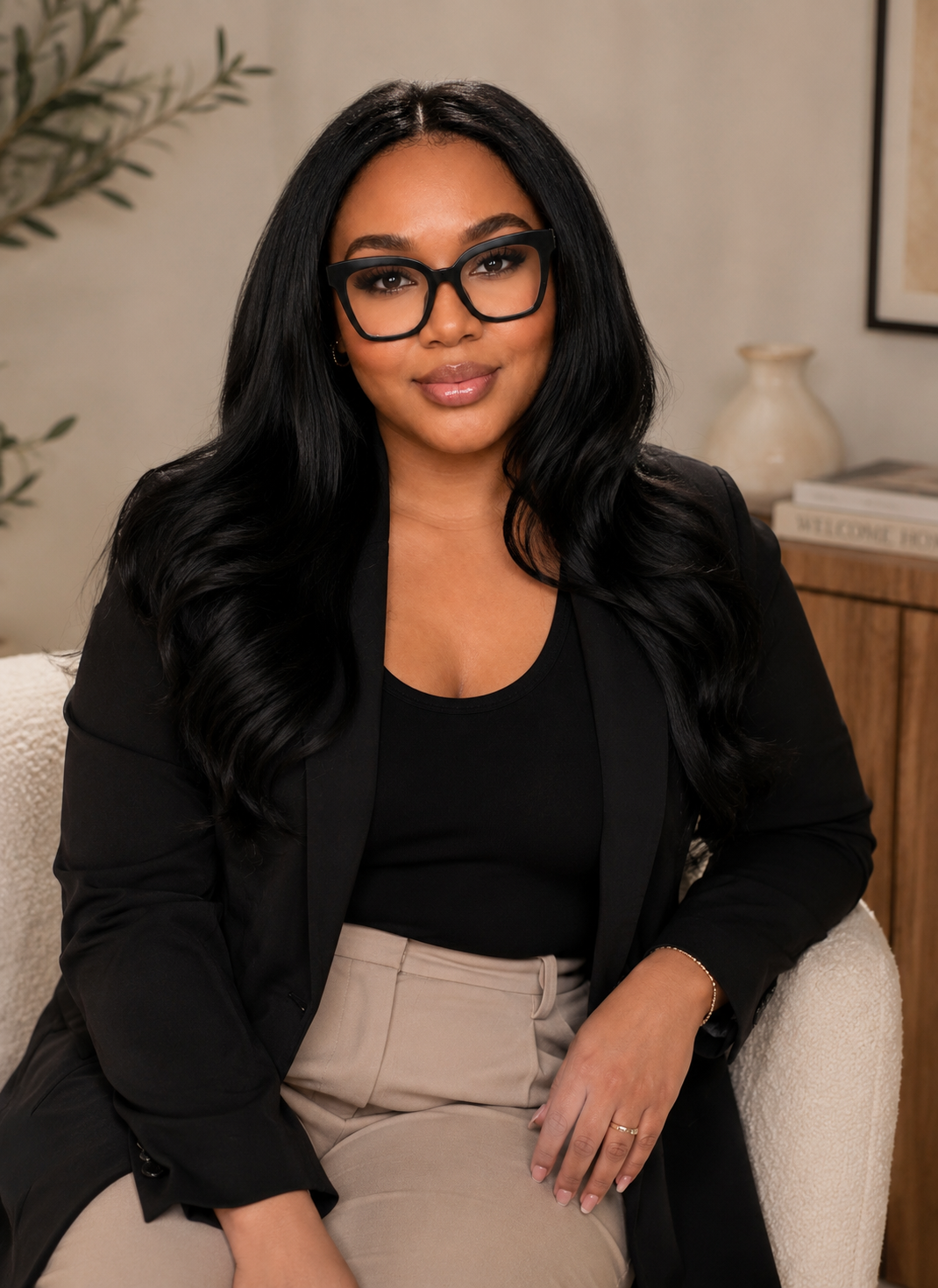
MEET JABRIELLE
I became a therapist because I've always been interested in the stories underneath what people do- the experiences, relationships, expectations, and patterns that shape how we see ourselves and move through the world.
In therapy, I'm not here to sit silently while you try to figure everything out on your own. I'll listen, ask questions, help you make connections, offer another perspective when it may be useful, and give us space to practice what you're learning along the way.
You don't have to perform therapy correctly with me. You can show up with a lot to say, no idea where to start, or somewhere in between.
I Don’t Believe Therapy Has to Feel Clinical to Be Meaningful.
HOW I THINK ABOUT THERAPY
Therapy can be thoughtful and evidence-informed without feeling stiff or impersonal.
I want our sessions to feel like a real conversation—one where you have space to be honest, laugh when something is funny, sit with something when it’s hard, and say, “I don’t know,” when you genuinely don’t know.
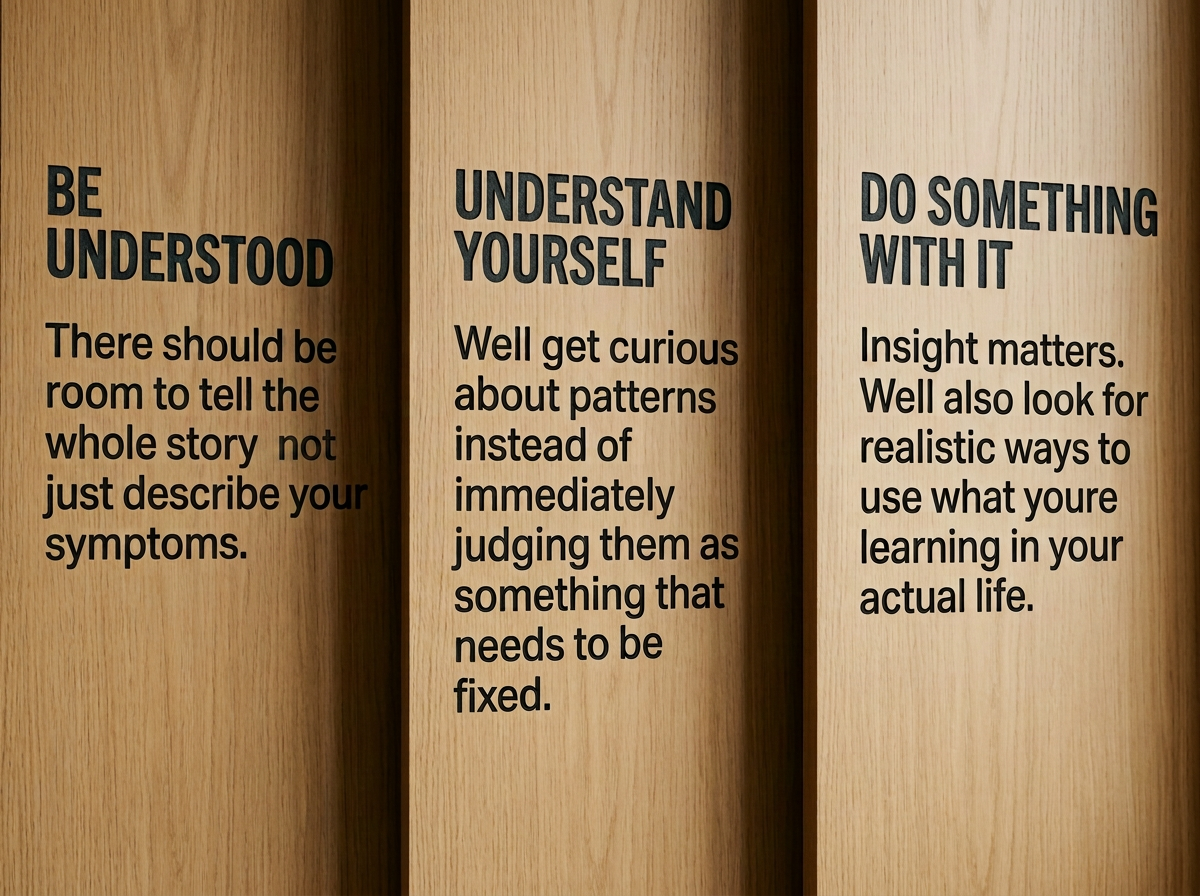
Sometimes we’ll spend time understanding where a pattern came from. Sometimes we’ll focus on what happened five minutes before our session. And sometimes we’ll practice a boundary, work through a thought, use an exercise, or figure out one small thing you can do differently this week.
I’m interested in helping you understand why you do what you do, but I don’t want us to stop there. Insight becomes more useful when we can connect it to how you want to live, communicate, make decisions, and take care of yourself outside of therapy.
You don’t have to become a different person. We’re making more room for you to understand yourself and choose what works for you.
I Don’t Just Use Tools. I Like Building Better Ones.
BEYOND THE THERAPY ROOM
My work has always been connected by one question: How can we make helpful information easier to understand and actually use?
My background spans social work, clinical practice, education, and educational technology. Over time, those areas naturally started coming together. Alongside providing therapy, I create therapeutic resources and build digital tools that explore new ways to support learning, reflection, and the work mental health professionals do every day.
Some projects are designed to help people take what they're learning about themselves beyond the therapy session. Others are built specifically for clinicians—turning clinical knowledge into practical tools that can make creating resources, planning interventions, and supporting clients a little easier.
For me, technology isn't about replacing the human part of this work. It's about building better ways to support it.
What I'm Building
MENTAL HEALTH TECHNOLOGY
Tools for Personal Growth
Digital experiences designed to support reflection, self-understanding, skill-building, and personal growth outside of the therapy room.
EDUCATIONAL RESOURCES
Turning Ideas Into Something Usable
Workbooks, worksheets, guided exercises, psychoeducation, and other resources designed to turn complex concepts into practical experiences people can actually work through.
Interested in the Technology & Design Side of My Work?
CLINICIAN TECHNOLOGY
Tools for Therapists
Digital tools designed around real clinical workflows from creating therapeutic exercises and resources to making useful clinical information easier to turn into action.
EXPERIENCE + EDUCATIONBig Ideas, Real Impact.
Clinical Experience Grounded in More Than One Perspective.
EDUCATION
Master of Social Work (MSW)
University of Texas at Arlington
Master of Education (MEd)
Educational Technology
University of Texas at Tyler
Bachelor of Science (BS)
Criminal Justice
University of Texas at Tyler
LICENSURE
Licensed Clinical Social Worker
Texas
Virginia
Connecticut
SPECIALIZED TRAINING
Certified Clinical Trauma Professional (CCTP)
Autism Spectrum Disorder Clinical Specialist (ASDCS)
Providing telehealth psychotherapy to clients located in states where I am licensed to practice.
Nearly a Decade of Experience Across
Private Practice • Outpatient Mental Health • Inpatient Psychiatric Care • School Social Work • Forensic Social Work • Applied Behavior Analysis
Therapeutic Approaches
CBT • ACT • DBT-informed skills • Interpersonal Therapy • Motivational Interviewing • Narrative Therapy • Trauma-Informed Care • Supportive Therapy • Grief Work • Behavioral Activation
The approach is never the goal by itself. I use different frameworks and strategies based on the person in front of me, what we're working on, and what is actually useful.
There’s a Person Behind All Those Letters, Too.
WHEN I’M NOT WORKING
I believe who we are outside of our work matters, too. When I'm not in sessions, creating resources, or working on a new idea, I appreciate the parts of life that give me room to recharge, be creative, and just be a person.
I bring that same humanness into my work. I don't expect therapy to be serious every second, and I don't believe professionalism requires being distant or impossible to relate to. There can be room for humor, personality, curiosity, and real conversation while still taking the work we're doing seriously.
-
Probably a new workbook, digital tool, website feature, or idea that started with me thinking, “There has to be a better way to do this.”
-
You’ll probably find me in the gym. Strength training has become one of the ways I make time for myself, challenge myself, and reset outside of work.
-
I genuinely enjoy building things. Whether I’m designing a therapeutic resource, working on an app, or completely rethinking my website, I love taking an idea and figuring out how to make it real.
-
The intersection of mental health, education, design, and technology-and how we can use all four to make helpful information more practical and accessible.
-
I have a hard time leaving a good idea as just an idea. If I think something could be useful, there’s a pretty good chance I’m going to try to build it.
-
Sometimes recharging looks like slowing down. Other times, it looks like a good workout, working on something creative, or giving myself space to focus on something completely outside of therapy.

Maybe We’d Work Well Together.
READY WHEN YOU ARE
Finding the right therapist is personal. Credentials and experience matter, but so does feeling like you can talk to the person on the other side of the screen.
If what you've read here feels aligned with what you're looking for, we can start with a brief conversation. You don't have to know exactly what you need or be ready to tell your whole story. We can simply talk about what's bringing you to therapy and whether working together feels like a good fit.
Virtual therapy for adolescents and adults in Texas, Virginia & Connecticut.